In this note
In the modern world, environmental sustainability is crucial in manufacturing and product choice. Polyvinyl Chloride (PVC) tiles, commonly used in various settings for flooring, have evolved to meet these eco-friendly demands. This article delves into the sustainable aspects of Eco-friendly PVC tiles, highlighting their contribution to environmentally conscious practices. PVC tiles, commonly used for various flooring applications, are increasingly recognised for their durability, aesthetic versatility, and eco-friendly attributes. This comprehensive overview delves into the various sustainable practices associated with PVC tiles, reinforcing their role in promoting environmental sustainability.
Recyclability of Eco-Friendly PVC Tiles
Embracing a Circular Economy
Post-Consumer Recycling: The ability to recycle PVC tiles after their service life is a significant step towards sustainability. This recycling process turns old tiles into raw materials for new products, significantly reducing landfill waste.
Energy-Efficient Manufacturing Processes
Reducing Carbon Footprint
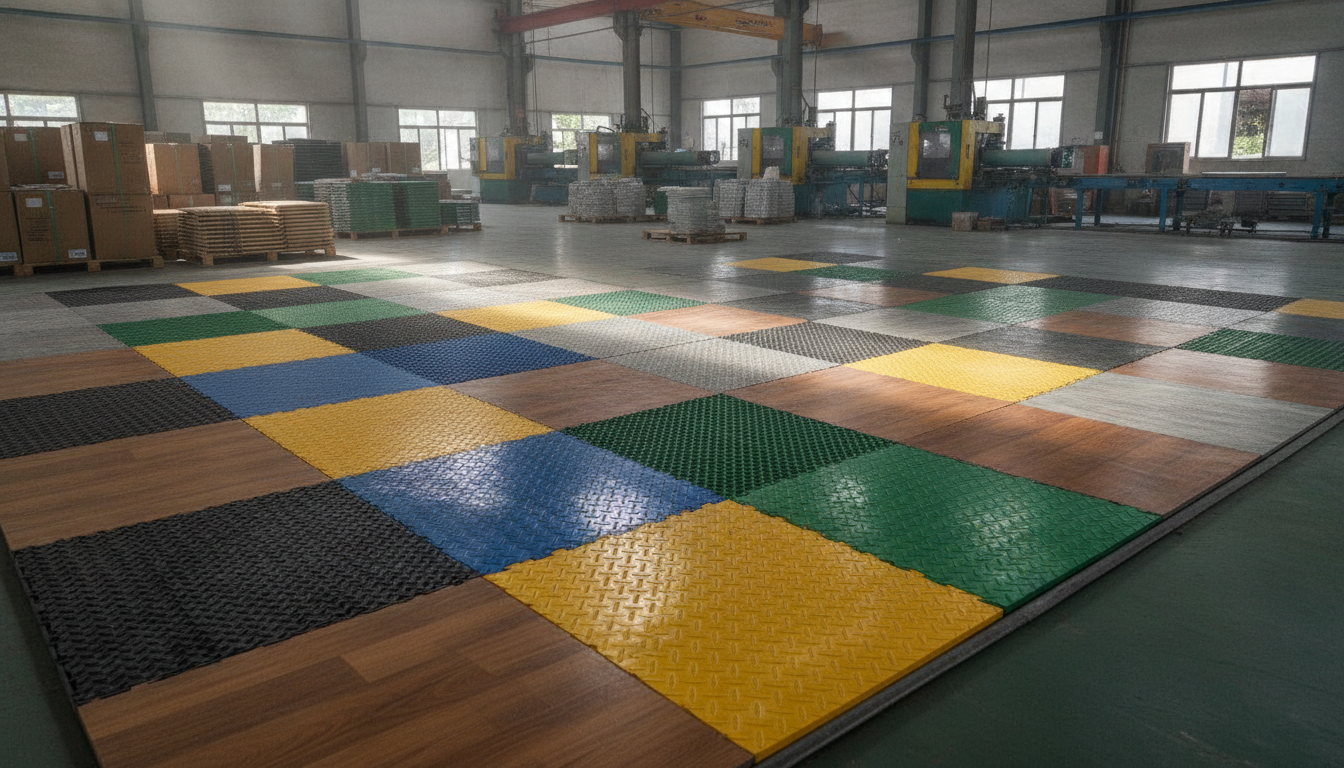
- Efficient Production Techniques: Modern Tiles manufacturing by Camp manufacturing processes for PVC tiles are designed to optimise energy use. This includes adopting energy-efficient machinery and streamlined production methods to minimise energy consumption and associated carbon emissions.
- Advancements in Technology: Ongoing technological innovations contribute to the energy efficiency of the manufacturing process, further lowering the environmental impact of Eco-friendly PVC tiles production.
Use of Eco-Friendly Materials in PVC Tiles
Sustainable Composition
Non-Toxic Additives: The industry shift towards using non-toxic, eco-friendly stabilisers and plasticisers in PVC tiles significantly reduces their environmental and health impact.
Lead-Free Formulations: Lead-free formulations in Eco-friendly PVC tiles align with global health and environmental standards, ensuring safety with PVC interlocking floor tiles and sustainability.
Recyclable + Modular: CAMP’s Lifecycle Differentiator
An Asset, Not Waste
Fully Recyclable at End of Life: CAMP Manufacturing’s PVC interlocking floor tiles are fully recyclable — even after 10+ years of service. At end of life, the engineered polymer composite is reclaimed and recycled, not sent to landfill.
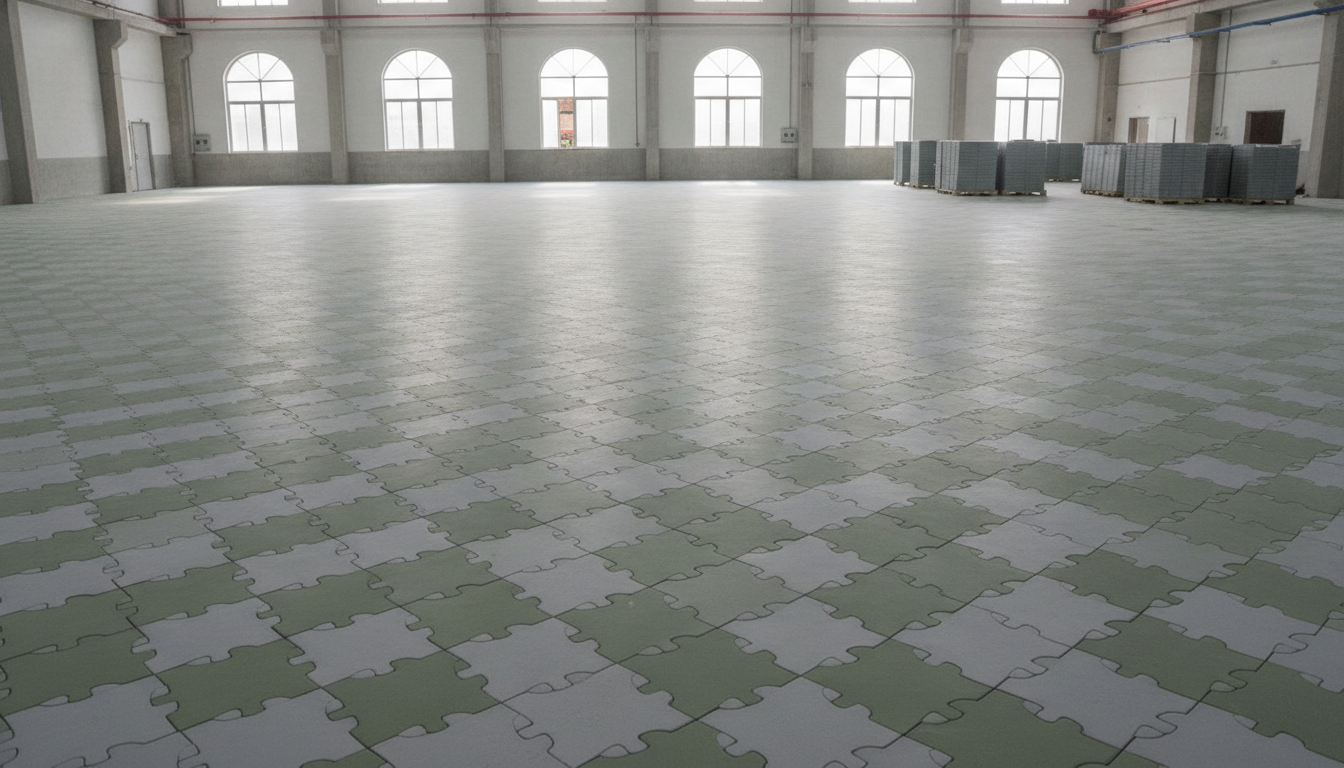
Modular and Relocatable: Because tiles dry-lay with a tool-free interlock, the floor can be lifted and reinstalled at another site. On a rented or leased shed, that means the floor stays your asset — recover the tiles when you vacate, or remove them before handing back the premises.
ISO 14001:2015 Certified: CAMP Manufacturing holds ISO 14001:2015 certification — our environmental management system is independently audited and verified.
Improving Indoor Air Quality: CAMP tiles install dry — no adhesives, no solvents, no chemical off-gassing during or after installation — a factor EHS and facility teams increasingly need documented for audit-ready, indoor-air-quality-conscious builds.
Why This Matters Across Industrial Sectors
Environmental credentials aren’t abstract for facility teams under audit pressure. In food-processing plants, automotive component units, and renewable-energy manufacturing facilities, VOC-free installation and a fully recyclable, non-land-filled floor increasingly appear on vendor sustainability checklists — alongside ISO 14001 status — well before a purchase order is signed.
Lifecycle Analysis of PVC Tiles
Assessing Environmental Impact
Longevity and Durability: The extended lifespan of PVC tiles means they require less frequent replacement, thereby reducing the cumulative environmental impact over time.
Lifecycle Assessment Studies: Comprehensive studies evaluating the environmental impact of PVC tiles throughout their lifecycle often reveal a lower overall footprint than other flooring materials, considering factors like energy consumption, resource use, and end-of-life disposal.
Summary
PVC tiles stand out as a sustainable flooring option, balancing functional requirements with environmental considerations. The recyclability, energy-efficient production, use of eco-friendly materials, contributions to green building practices, and positive lifecycle assessments highlight PVC tiles as a responsible choice in modern construction and interior design. As sustainability continues to be a driving force in the industry, PVC tiles are poised to play a significant role in the evolution of eco-friendly building materials.
Frequently Asked Questions (FAQs)
1. How does Camp Manufacturing contribute to environmental sustainability with its PVC tiles?
At Camp Manufacturing, we prioritise environmental sustainability in our PVC tile production. This includes using recyclable materials to minimise waste and adopting energy-efficient manufacturing processes to reduce our carbon footprint. Additionally, our PVC tiles are made with non-toxic and lead-free additives, ensuring they are safe for both the environment and end users.
2. Can PVC tiles from Camp Manufacturing be recycled after use?
Yes, our PVC tiles are designed with recyclability in mind. Post-consumer PVC tiles can be recycled and repurposed into new products, aligning with our commitment to a circular economy. This process helps reduce landfill waste and supports sustainable material usage.
3. Are the PVC tiles from Camp Manufacturing suitable for green building projects?
Absolutely. CAMP’s PVC interlocking tiles support environmentally responsible facility projects: they’re fully recyclable at end of life, install without adhesives or solvents (low VOC), and are manufactured under our ISO 14001:2015-certified environmental management system. Because tiles dry-lay and can be lifted and relocated, the floor also stays a recoverable asset rather than one-time landfill waste.
4. How does the production process of Camp Manufacturing’s PVC tiles ensure energy efficiency?
We employ advanced, energy-efficient manufacturing techniques in producing our PVC tiles. These processes are designed to minimise energy consumption, reducing our overall environmental impact. Continuous technological advancements further enhance the energy efficiency of our production line.
5. What measures does Camp Manufacturing take to ensure the health and safety aspects of its PVC tiles?
Health and safety are paramount in our PVC tile production. We use eco-friendly, non-toxic stabilisers and plasticisers, ensuring our tiles are safe for indoor environments. Our products undergo rigorous testing to ensure low VOC emissions, contributing to better indoor air quality and creating safer living and working spaces.